
Community Elder Interviews
社區耆老訪談
回望童年光影:洪先生的故事
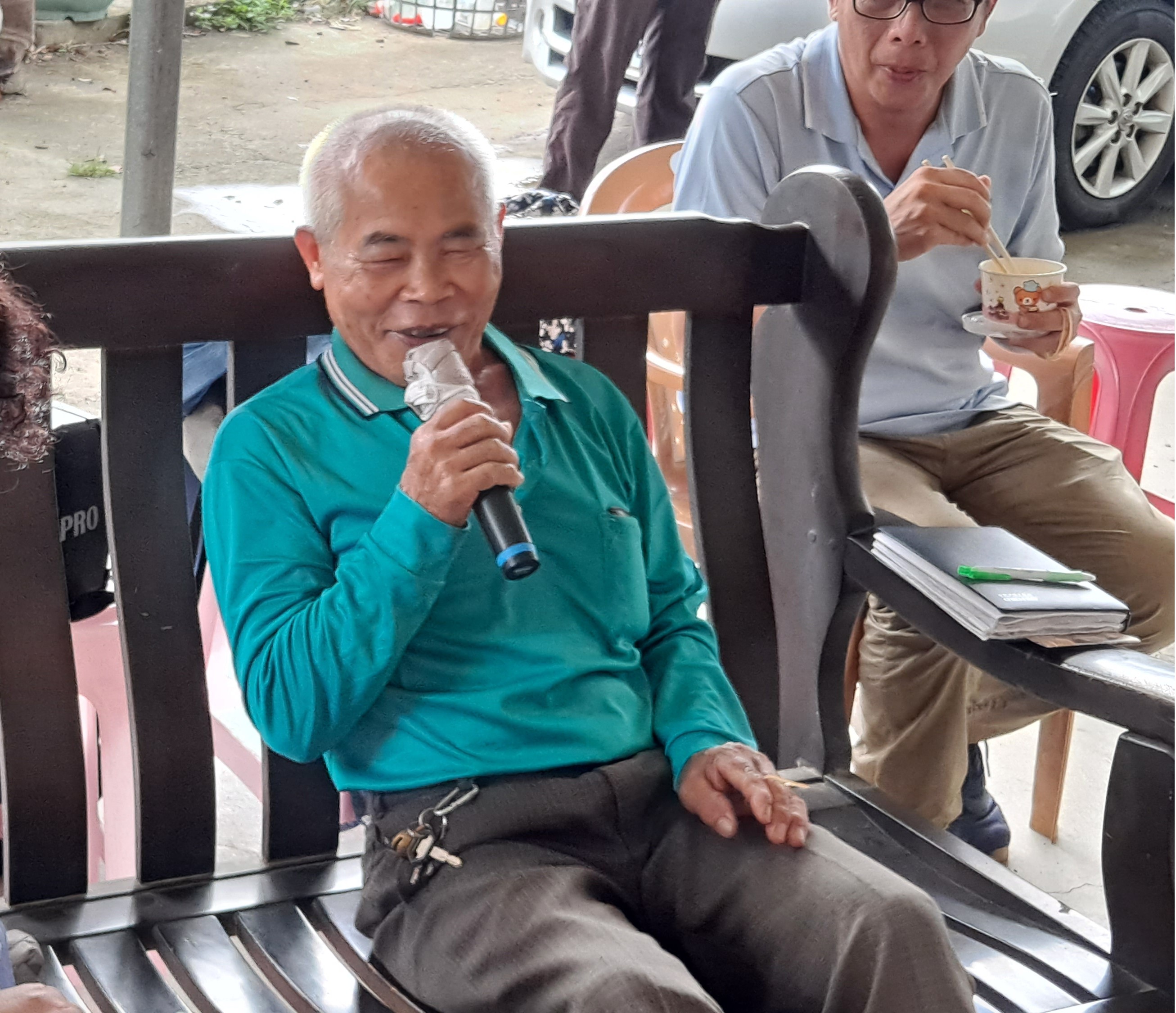
在一次地方記憶的分享聚會中,洪先生娓娓道來他那段深埋在時光中的童年往事,他的故事帶領我們穿越回那個物資匱乏卻情感濃厚的年代。
At a local memory-sharing gathering, Mr. Hung spoke gently about the childhood memories deeply buried in time. His story transported us back to an era of material scarcity yet emotional abundance.
洪先生原籍鹿埔。當年,因應政府推動的「三七五減租」政策,家族擔心土地被徵收,遂遷移至現址生活。他回憶,他父親那一輩有五、六位兄弟,而他原為叔伯的孩子,僅在四個月大時,便被過繼為養子,自此開始新的家庭生活。七歲那年,養父母生下了一名女兒,而原來在鹿埔的叔伯們則陸續移居高雄,自此聯繫漸少。
他在22歲時經由媒妁之言成婚。談及當年的婚禮,他輕描淡寫卻帶著幾分懷舊:「穿著西裝皮鞋、坐著花轎,跟現在也差不了多少。」
Mr. Hung’s ancestral home was in Lupu. At the time, due to concerns about land confiscation under the government’s “375 Rent Reduction” policy, his family relocated to their current residence. He recalled that his father’s generation had five or six brothers, and that he was originally born to one of his uncles. At just four months old, he was adopted and raised by another branch of the family, beginning a new chapter of life. When he was seven, his adoptive parents had a daughter. Meanwhile, his uncles gradually moved to Kaohsiung, and contact between families dwindled over time.
At 22, Mr. Hung was married through a traditional matchmaker. Recounting his wedding, he spoke with a nostalgic smile:
“Wearing a suit and leather shoes, sitting in a flower sedan chair — not so different from weddings today.”
談起童年生活,洪先生不諱言那是一段「苦日子」。他描述兒時的道路:「兩邊像菜刀一樣,會割腳。」當母親帶他前往內門採購時,因害怕腳痛,他乾脆用爬的。環境險峻,經濟困頓,十來歲時便得挑著香蕉去販賣。後來雖然開拓了路,道路仍多泥濘,夏日出門穿雨鞋也寸步難行。不穿不能走,穿了卻又拖不動。
「那時的小孩六、七歲就沒在玩了」,他語氣平靜卻沉重。凌晨四點多就被父親叫醒耕田,若不起床就被直接拖下床。農忙過後,還要割草餵牛。
Talking about his childhood, Mr. Hung admitted frankly that it was a time of hardship. He described the roads of his youth:
“Both sides were sharp like cleavers, they would cut your feet.”
When his mother took him to shop in Neimen, he was so afraid of the pain that he crawled on all fours instead of walking. The terrain was rough, and the economy was difficult. In his early teens, he had to carry bananas to sell. Even after the roads were improved, they remained muddy — in summer, even wearing rain boots, it was hard to walk. Without them, you couldn’t go anywhere; with them, you could barely move.
“Kids back then didn’t play much after six or seven years old,” he said, with a calm but heavy tone. At 4 a.m., his father would wake him to plow the fields. If he didn’t get up, he’d be dragged out of bed. After farm work, he still had to cut grass to feed the cattle.
洪先生說,兒時的主食是番薯籤,難以下嚥。逢年過節,家中若能分得一小塊幾寸大的豬肉,便是最開心的時刻。「我會吃一口飯,舔一下那塊肉,再吃一口飯,根本捨不得吞下去。」他笑說,那種捨不得的幸福,是現代人難以體會的。
夏天時,他們會用鳳尾草與青草煮飲料。萬一不小心被割傷,也只能以泥土敷傷止痛。他回憶:「最好玩的就是抓青蛙煮湯,超好吃;最討厭的就是沒睡飽。」孩童們趁放牛時玩耍,有次,他偷溜去摘山芭樂,牛卻跑進稻田裡踐踏,結果挨了頓打。說到這,他露出不好意思的笑容:「水牛就是愛玩水田啦!」
他回憶,家中種稻、番薯、樹薯,要想吃雞肉,就得自己養雞;羊則是婚後才開始飼養。村裡不能公開宰豬,大多偷偷進行。因粉薯栽植容易,土地收完鳳梨後再種粉薯,這樣輪作的習慣也延續至今。
「其實也沒什麼抱負啦,生活就是這樣,父母做什麼我就跟著做什麼,」他淡然地說。
Mr. Hung shared that sweet potato shreds were the staple of his childhood — and they were hard to swallow. On holidays, if the family received even a small piece of pork, just a few inches wide, it was the happiest moment:
“I’d take a bite of rice, then lick the meat, then eat another bite. I couldn’t bear to actually swallow it.”
He chuckled and said that kind of happiness — born from restraint — is hard for people today to understand.
In summer, they would boil Chinese Brake and herbs to make drinks. If injured, they had only mud to apply as a pain reliever. He recalled:
“The most fun thing was catching frogs and making frog soup — so delicious! The worst part was not getting enough sleep.”
While tending the cattle, kids would sneak off to play. Once, he ran off to pick wild guavas, and the buffalo trampled into the rice field — he got a beating for that.
Grinning sheepishly, he said, “Water buffalo just love playing in the paddies!”
He recalled that the family grew rice, sweet potatoes, and cassava. If they wanted to eat chicken, they had to raise them by themselves. They only began raising goats after he got married. Slaughtering pigs couldn’t be done openly in the village — it had to be done in secret. Since sweet potatoes were easy to grow, they often planted them after harvesting pineapples. This crop rotation practice still continues today.
“I didn’t have any grand ambitions. Life was just like that — I did whatever my parents did,” he said plainly.
Mr. Hung especially emphasized the importance of irrigation ponds.
洪先生特別提到埤塘的重要性。「最苦的就是挖埤塘,要全村人來幫忙,七、八個人一起扛土。」埤塘的水不只用來餵豬、灌溉田地,也供生活使用,有些人家會用馬達抽溪水。他說,那時候的溪水乾淨到可以直接喝。
乾旱時,還得到內門挑水,一個上午跑兩趟。他語帶驕傲地說,村民之間的互助精神濃厚,無論是種番薯、割稻,村長一聲招呼,就能湊出五桌人來幫忙。
“The hardest thing was digging the pond. It took the whole village — seven or eight people had to carry the soil together.”
The pond water wasn’t just for feeding pigs and irrigating fields — it was also used for daily living. Some households even used pumps to draw water directly from the stream. He said that back then, the stream water was so clean, you could drink it straight.
During droughts, they had to carry water from Neimen, making two trips in a morning. He spoke with pride about the strong sense of community:
“When it came to planting sweet potatoes or harvesting rice, the village chief just had to say the word and five full tables of people would come to help.”
談到野生動物,童年裡沒看見鹿,但經常見到兔子、石虎和白鼻心。「阿嬤說石虎會咬雞,後來就越來越少見了。」他還記得溪邊的白毛蟹,雖然常看到,卻不會抓來吃。「現在都少見了,」他語氣中難掩感嘆。
When it came to wildlife, he said they didn’t see deer in his childhood, but rabbits, leopard cats, and Formosan masked palm civet were common.
“Grandma used to say leopard cats would bite chickens, and later on, they became rarer.”
He also remembered the Geothelphusa ancylophallus that lived near the stream. Although they were often seen, people didn’t catch them to eat.
“Now they’re rarely seen anymore,” he said, his voice tinged with sorrow.
洪先生的分享,讓我們聽見土地上最真誠的聲音。那是一個用雙手與汗水築起的時代,在快速變遷的今日,這些記憶,仍閃耀著不被遺忘的光。
Mr. Hung’s reflections gave us a revealed the most sincere voices rooted in the land. It was an era built by hands and sweat, and in today’s fast-changing world, these memories still shine with a light that refuses to be forgotten.
潘先生的
馬頭山歲月
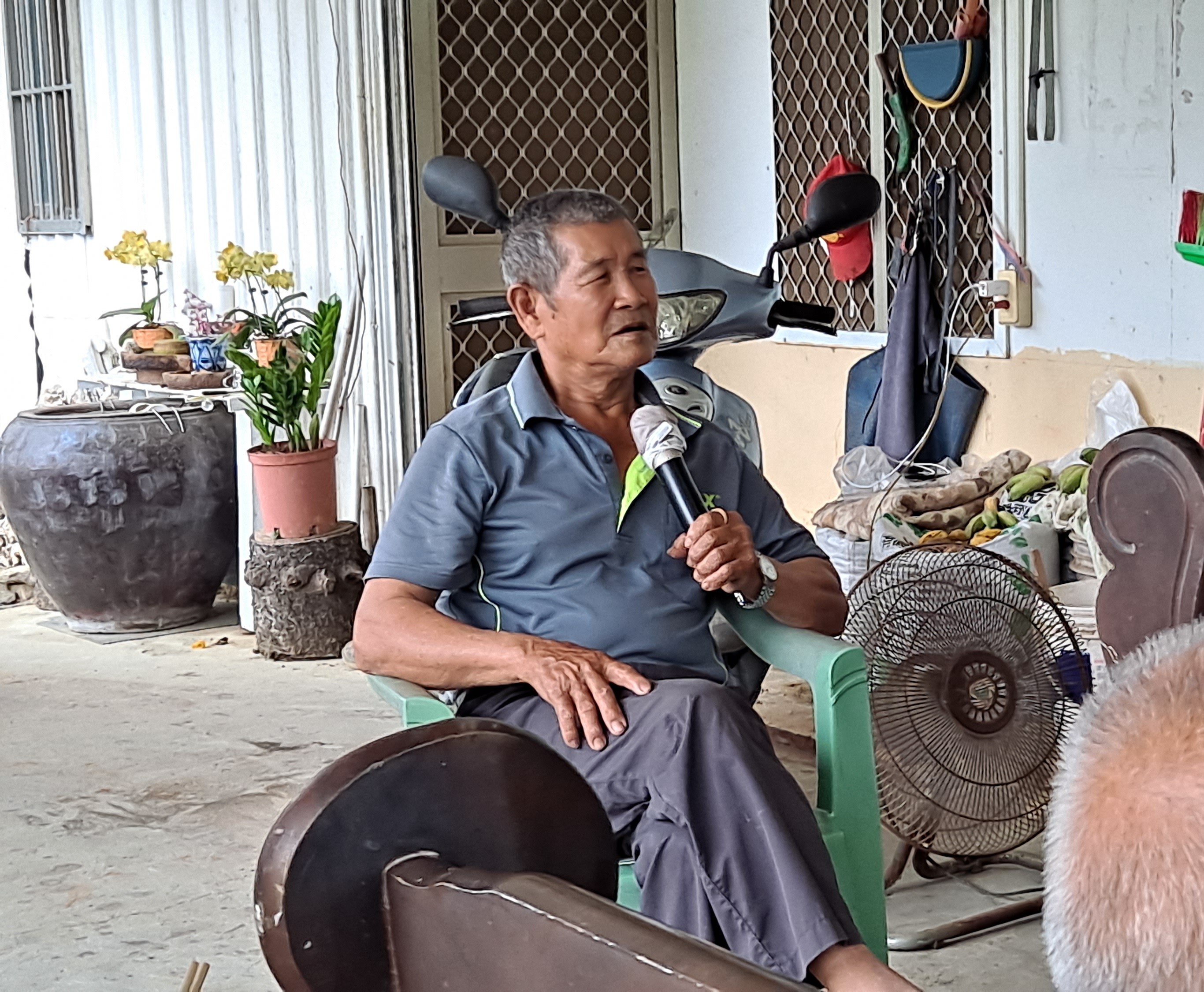
「我是在民國59年搬到瑞山,算一算,也住了五、六十年了。」潘先生談起童年記憶,他緩緩描繪著一幅既熟悉又遙遠的農村畫面。
“I moved to Ruishan in 1970, so it’s been fifty or sixty years now," Mr. Pan said as he began to recall his childhood memories, slowly painting a picture of a rural scene that felt both familiar and distant.
童年時期,潘先生赤腳走到觀亭國小讀書,一條條海銀土路是每日的必經之路。「一下雨,整條路就很滑。」那時候沒有書包,他們用四角巾包著書本,頂著陽光與風雨,一步一步地走向求學之路。
As a child, he would walk barefoot to Guanting Elementary School, treading along the badland roads day after day. “When it rained, the whole road would turn slippery," he recalled. At that time, there were no schoolbags — they would wrap their books in a kerchief, braving the sun and the wind, step by step on their way to school.
小學畢業後,他並未繼續升學,而是在馬頭山「馬尾」地帶放牛。「那裡有些地勢很陡,有很多藤子,我們就抓著藤子爬上爬下。」潘先生笑著回憶,「那時候沒想過危險,後來才知道,如果藤子斷了,掉下去就沒命了。」
放牛的生活樸實卻充滿記憶。他負責照看一大一小兩頭牛,常常鬧出笑話。「牛會偷跑去吃人家番薯,那些田主會罵得超大聲。」而當時的孩子也沒什麼玩具,連陀螺都不會打。小時候的水果就是山上的土芭樂跟芒果,還不能亂摘喔!
After graduating from elementary school, he did not continue his studies but instead herded cattle in the “Mawei” area of Matoushan. “Some of the terrain there was very steep, with many vines. We would cling to the vines to climb up and down,” he said with a laugh. “Back then, we never thought about danger—only later did I realize that if a vine snapped, the fall could have been fatal.”
Life as a cattle herder was simple but full of memories. He looked after two cows, one big and one small, and often got into trouble. “The cows would sneak into other people’s sweet potato fields, and the owners would yell at us so loudly," he laughed. In those days, children had few toys — he didn’t even know how to spin a top. Fruits were mostly wild guava and mango from the mountains, and even then, you couldn’t just pick them without permission.
因家境因素,潘先生無法升學,只能靠勞力維生。十幾歲時,他開始在杉林內山打工,「從家裡走過去要半小時,住在那邊做工,一天賺三十塊,那時已經覺得很多了。」他的工作是挑重物,一百多斤的重量,用扁擔擔著走山路,對他來說只是生活的一部分。
年輕時,他曾到龍泉當三年海軍陸戰隊的兵,「當兵真的很艱苦啊!整天只穿一條內褲訓練。」潘先生語帶誇張地笑說,「當時如果內門那梯次有六人抽到海陸,兵役課都還會放鞭炮慶祝呢!」
Because of family circumstances, Mr. Pan could not continue his education and had to make a living through physical labor. In his teens, he began working in the cedar forests of Neishan. “It took half an hour to walk there from home. I’d stay there for work, earning thirty dollars a day, which felt like a lot back then." His job was to carry heavy loads — more than 100 catties — balanced on a shoulder pole along the mountain trails, something he considered just part of life.
In his youth, Mr. Pan also served three years in the Marine Corps in Longquan. “Military service was truly tough—we trained all day wearing nothing but underpants,” he recalled with exaggerated amusement. “At the time, if six people from Neimen’s draft class drew the Marine Corps, the military service office would even set off firecrackers in celebration!”
除了勞動與兵役,他的青春歲月也曾在地方文化中綻放。他十幾歲就加入宋江陣,參與陣頭活動,負責扛獅尾。「扛獅頭的那個啊,常常偷拿紅龜粿,因為以前不富裕,大家都搶著吃。」
Beyond labor and military life, his younger days also blossomed within the sphere of local culture. He joined the Song Jiang Battle Array troupe in his teens, participating in temple processions and carrying the tail of the lion costume. “The person carrying the lion’s head would often sneak Turtle-shaped rice cake. Since life wasn’t prosperous, everyone scrambled for a bite,” he recounted.
潘先生也參與過古井與埤塘的開墾。「以前耕地才兩分,沒鐵牛,就靠牛犁田。」談到埤塘管理,他提到過去埤塘還需登記編號、向農業課申請,「更早以前,還沒有這麼嚴格的管制。」
Mr. Pan also took part in reclaiming old wells and ponds. “Back then, each household farmed only a small plot—about two-tenths of a hectare—and without iron oxen (mechanical plows), we relied on cattle to till the fields.” He described pond management practices of the past, which required registration numbers and applications to the agricultural office. “Earlier still, the regulations were far less strict.”
當被問及與原住民的關係時,他表示:「我們姓潘,加了三點水,其實也是番,應該是平埔族,沒去戶政查過。內山多是西拉雅族,祖先來台也都跟在地人通婚。」
When asked about relations with Indigenous peoples, he replied: “We are likely of Plains Indigenous (Pingpu) descent. I’ve never checked with the household registry. In the uplands, most people were Siraya, and our ancestors intermarried with the locals.”
至於是否曾考慮離鄉發展?潘先生語氣溫和卻堅定地說:「沒有啦,就是要陪在父母身邊。」談及語言,他也笑說:「客家人學台語很快,但台灣人學客語很難,語言不通,所以跟美濃那邊交流不多。」
As to whether he had ever considered leaving home for opportunities elsewhere, Mr. Pan’s tone was gentle yet firm: “No, I just wanted to stay with my parents.” On language, he smiled and added: “Hakka people learn Taiwanese quickly, but it’s hard for Taiwanese to learn Hakka. Because of the language barrier, we didn’t have much exchange with people from Meinong.”
在潘先生的故事裡,我們看到一段段土地與生命交織的片段,沒有波瀾壯闊,卻蘊藏著平凡而動人的真實。他的話語,如同一條條山間小路,蜿蜒前行,帶著人們走進那個赤腳行走、抓著藤蔓上山下田的年代。
In Mr. Pan’s account, we encounter fragments of life deeply interwoven with the land—unadorned, yet rich with an understated poignancy. His words are like winding mountain paths, leading us back to an era when bare feet pressed the earth, and hands grasped vines to climb both hill and field.
鳥仔伯的記憶 –
從苦難童年到守護山林,他用一生守著土地與信念
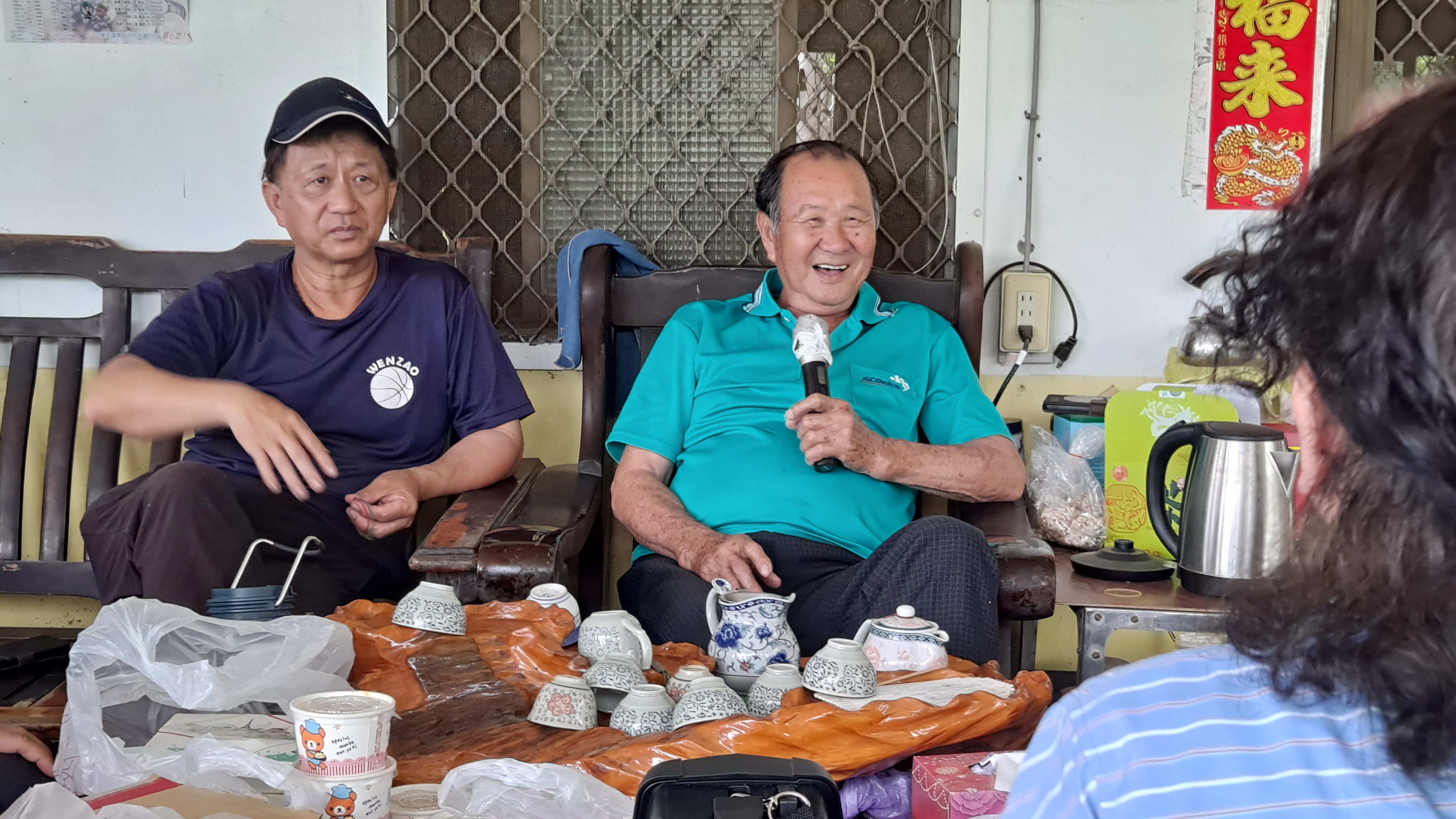
他出生僅28天時,父親正在當兵。父親一心想偷回家看看初生的兒子,卻因此被日本人拳打腳踢,最終不幸喪命。從那之後,鳥仔伯便與母親相依為命。
When he was only 28 days old, his father was serving in the military. Longing to secretly return home to see his newborn son, his father was caught, beaten, and kicked by Japanese —and tragically lost his life. From that moment on, “Uncle Bird” lived alone with his mother.
童年在大橋頭度過,小學畢業後,母子搬至溪尾,住在茅草搭建的柱腳厝。生活困苦,日子靠犁田維生。孩提時代的滋味,他至今仍記憶猶新:「那時吃的東西很差,粥、米粉,有時去溪裡抓蝦,蝦子隨便抓都有,就能做豆醬湯。」那年代兔子很多,他們便抓來煮。雖曾想養兔子,但因衛生問題作罷,雞倒是養了不少。不過,雞蛋不是拿來吃,而是用來孵小雞。實在餓了,就吃些「臭雞蛋」,煎過的臭雞蛋,配上豆醬,竟也成了記憶中的美味。他苦笑:「小孩子根本輪不到吃啦。」
He spent his childhood in Daqiaotou. After finishing elementary school, mother and son moved to Xiwei, settling in a humble stilt house with a thatched roof. Life was hard, and the days were sustained by plowing the fields. The tastes of childhood remain vivid in his memory:
“Back then, what we ate was very poor—porridge, rice noodles… Sometimes we’d go down to the creek to catch shrimp. There were plenty, easy to find, and we could make shrimp and soybean paste soup.” In those days, rabbits were plentiful, and they would catch and cook them. He once thought about raising rabbits, but gave up due to sanitary concerns. Chickens, however, were kept in larger numbers. Yet the eggs were not for eating—they were saved for hatching chicks. When hunger became unbearable, they would eat “spoiled eggs.” “Once fried and paired with soybean paste,” he said with a wry smile, “it actually became a delicious memory. But kids hardly ever got a share.”
10多歲,他便下田犁地。家境清寒,小學畢業後便無力升學,只能投身農務。無論內山做工、農場糖廠,到處都有他的身影,那時做一天工20元。
By his early teens, he was already plowing fields. With no means to afford further schooling after elementary graduation, he devoted himself entirely to farm work. Whether it was laboring in the mountain interior, working on agricultural estates, or planting sugarcane for the sugar mills, his presence could be found everywhere—earning 20 NT dollars a day at the time.
25歲他去當兵,在軍中服役一年四個月。退伍不到一年,他便在民國59年帶著一群年輕人南下高雄,開始另一段漂泊的生活。他很早便結婚,當兵前已是三個孩子的父親,如今育有四名子女。
At 25, he joined the military, serving for one year and four months. Less than a year after being discharged, in 1970 (the 59th year of the Republic of China), he led a group of young men south to Kaohsiung, beginning another chapter of a wandering, hard-working life. He had married early—by the time he enlisted, he was already the father of three children. Today, he is the father of four.
他在高雄生活超過三十年,後來回鄉從事鳥類飼養工作,大家便叫他「鳥仔伯」。當時台灣的小鳥產業多以外銷為主,直到SARS爆發,市場受挫、出口停滯,他只好忍痛低價賣出存鳥,產業也就此收起。
He lived in Kaohsiung for over thirty years before eventually returning to his hometown to work in the bird-breeding business, earning the affectionate nickname “Uncle Bird.” In those days, Taiwan’s bird industry was mainly export-oriented. But when SARS struck, the market collapsed, exports stalled, and he was forced to sell his stock at low prices. Eventually, the business was shut down.
雖然結束產業轉型,但他對土地的感情從未止息。他談起童年時砍刺竹、搭竹筏的情景。那時的竹子幾乎無所不用——蓋房、燒飯、編織日用品,皆仰賴刺竹。甚至番薯田後來都改種竹子,因為竹子收購價好,一支可賣20至30元。直到塑膠製品大量出現後,刺竹才逐漸退出生活,卻也讓更多野生動物得以棲息。
Even after ending that chapter, his bond with the land never faded. He recalled childhood memories of cutting thorny bamboo and building bamboo rafts. Bamboo back then was indispensable—it was used for building houses, cooking fuel, and weaving daily necessities. Even sweet potato fields were eventually replaced with bamboo because the market price was good—a single stalk could fetch 20 to 30 NT dollars. It wasn’t until the mass adoption of plastic products that thorny bamboo slowly disappeared from daily life, which, in turn, allowed more wild animals to thrive.
談及近年的抗爭經歷,鳥仔伯語氣堅定卻溫和。他是馬頭山反掩埋場運動的堅定守護者之一。他與村民們日夜輪班駐守在山頭3-4年,阻止開發單位傾倒垃圾,守護祖先留下的土地。他說:「我們花錢做地質調查,才知道對方資料造假。」駐紮時,與可寧衛的相關的人員彼此不相識,但在煮飯時,主動招待對方,釋出善意,慢慢地,原本的敵對者也變成了朋友。
Speaking of more recent years, Uncle Bird’s voice took on a calm yet resolute tone. He was one of the steadfast guardians in the anti-landfill movement at Matoushan. Alongside fellow villagers, he took turns guarding the mountain day and night for three to four years, stopping developers from dumping waste and protecting the land passed down by their ancestors. “We paid for a geological survey ourselves,” he explained, “and that’s how we discovered their data was falsified.” When they first set up camp, they did not know the employees from the Ke Ningwei company. But while cooking, he would invite them to share a meal—a gesture of goodwill that, over time, turned former adversaries into friends.
如今,鳥仔伯仍住在他熟悉的瑞山,笑談兒時苦日子、年輕時的拼搏,以及與自然共存的智慧。他的故事,不僅是一段個人的生命紀錄,更是一代台灣農村子弟的縮影。
Today, Uncle Bird still lives in his beloved Ruishan, smiling as he talks about the hardships of his youth, the struggles of his younger years, and the wisdom of living in harmony with nature. His story is more than just a personal life record—it is also a reflection of an entire generation of Taiwan’s rural children.
馬頭山在地原住民 – 棧哥生命故事

號稱自己為馬頭山內南社區「在地原住民」的棧哥。回顧小時候的生活及環境狀態以及教育學習體現惡地困境,卻也展現人事物的韌性特質。由於惡地的生活環境原始未開展,生存困境影響在地家族世代延續。因人丁不足,鄭大哥依據其家族史了解,姓許家庭男丁過繼鄭家,此舉體現出因人與人相互扶持而形塑關係性連結,這樣的連結包含著感性和理性生活信念。
Self-described as the “local native” of the Matoushan Nei-Nan community, Brother Zhan reflects on his childhood life, the environmental conditions of the time, and his educational experiences—narratives that reveal the hardships of living in Taiwan’s badland terrain while also demonstrating the resilience of people, relationships, and material culture. The primitive and undeveloped state of the badland environment posed significant challenges to survival, shaping the intergenerational continuity of local families. As Mr. Zheng (known as “Brother Zhan”) recounts from his family history, a male descendant from a Xu family branch was adopted into the Zheng family due to a shortage of male heirs. This act of kinship maintenance illustrates how mutual support between individuals forged relational ties, encompassing both emotional bonds and pragmatic survival strategies.
馬頭山惡地生活,不易生產居經濟價值物產,棧哥提到說,因早期台灣糖業生產重要,甘蔗尚能在惡地少量種植,他的民國初年出生父親努力求生存,有幸協助在地貨商甘蔗集貨,他的父親隨之成為在地甘蔗的大盤商,也因此能蓋出夯土塊、泥巴夾竹牆以及磚造大房,定居在地。
Life in the Matoushan badlands was not conducive to producing goods of high economic value. However, as Brother Zhan notes, during the early years of Taiwan’s sugar industry, sugarcane—though only marginally cultivable in the badlands—still played a role in the local economy. His father, born in the early Republican era, worked tirelessly to survive and was fortunate to assist local merchants in collecting sugarcane. Over time, his father became a prominent local sugarcane wholesaler, which enabled the family to construct a large residence using rammed earth blocks, mud-and-bamboo walls, and eventually brickwork—establishing their permanent settlement in the area.
求學時期很艱苦,棧哥身為旗山內門的觀亭國小畢業生,在在地有許多的學長學弟,至今仍常常回去母校運動打乒乓球,鄭大哥回想小時候學習過程,光是上課下課上學回家走路一趟就是將近一小時,回程也是。山路因惡地地貌上下波崎嶇,地質多為灰泥泥巴路,容易走的路則是石子路,路途中還得經過三座橋,越過兩條溪流,上下坡路徑如「窄稜」般一人身寬,難以雙向錯會。
Education was hard-won. A graduate of Guanting Elementary School in Qishan’s Neimen area, Brother Zhan still maintains connections with his alma mater, frequently returning to play table tennis with fellow alumni. Recalling his school days, he describes the commute alone as nearly an hour each way. The route wound through undulating slopes of badland terrain, with grey clay roads prone to becoming slippery, while more stable paths consisted of gravel. Along the way, he had to cross three bridges, ford two streams, and traverse narrow ridge-like trails scarcely wide enough for a single person, making two-way passage nearly impossible.
上下課走路時也常因擔心弄髒保護鞋子,打著赤腳子走,玩樂中路程卻也變短變快了。特別是下雨天泥巴路滑,因此常常是摔的屁股如「紅龜粿」。放假時,更會一同上馬頭山放羊去,常常打鬧作弄同學朋友,不忘呼朋引伴帶著羊兒一起下山回家。日復一日年復一年,也摔出一身硬功夫。
To protect his shoes from being soiled, he often walked barefoot to school, finding that the journey felt shorter and faster when mixed with play. Rainy days turned clay paths treacherous, and falls often left him with a butt red and swollen “like a Turtle-shaped rice cake.” During school holidays, he and his friends would herd goats on Matoushan, teasing and roughhousing with one another, before calling to their goats and descending the mountain together at day’s end. Year after year, such routines instilled in him both physical endurance and a deep familiarity with the land.
當時就是這麼一群在地的孩子們,一起生活、打架嬉鬧、玩樂成長,棧哥回顧過去生活,雖困難但也時時充滿歡樂。家族歷經四五個世代,皆生活在這地方,至今對這土地所擁有的親情和感情,在馬頭山社區仍不斷的延續,畫出新的篇章。
It was this cohort of local children who lived, fought, played, and grew up together—forming bonds through shared hardship and joy. Brother Zhan’s family has resided in this area for four to five generations, and the kinship ties and emotional attachment to the land remain deeply rooted in the Matoushan community, continuing to evolve as new chapters of its history are written.
 馬頭山返野
馬頭山返野 