

Others
其他活動
114年 馬頭山人文生態雙語遊程





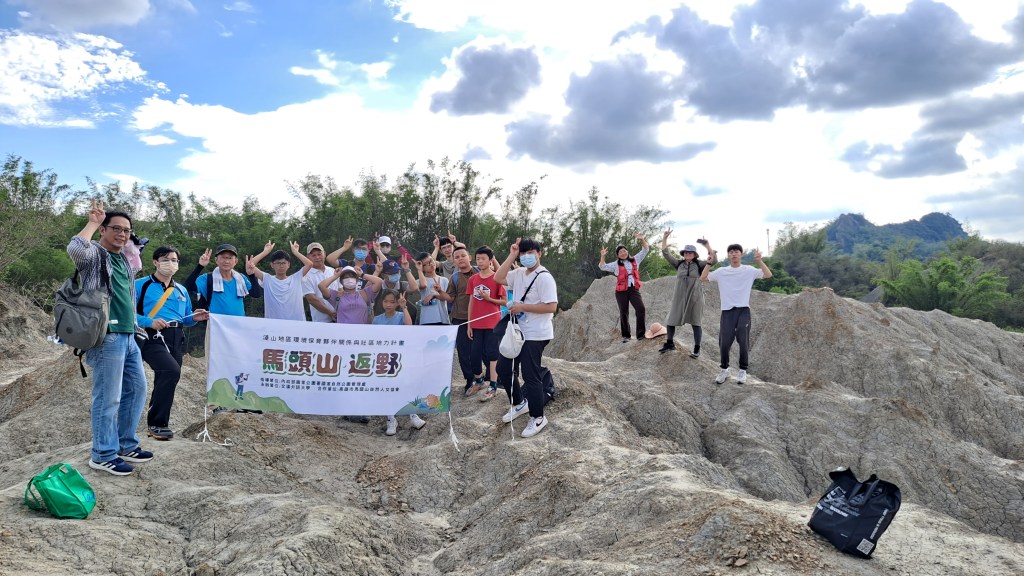
時間:4/25 (五) 、 5/18(日) 、 5/24(六)
馬頭山地區
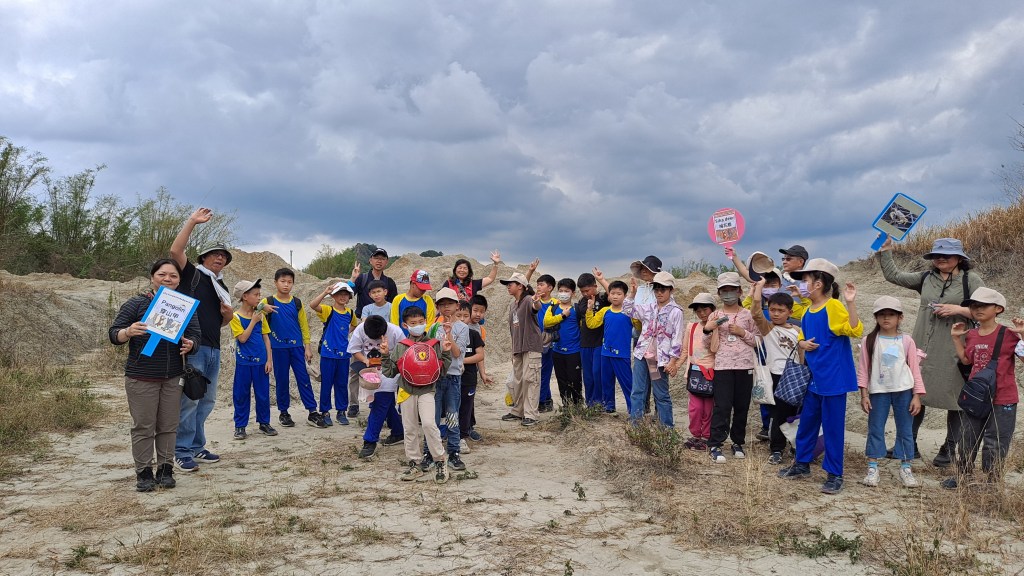
114年「淺山地區環境保育夥伴關係與社區培力計畫」於4月25日、5月18日與5月24日舉辦三場次人文生態雙語遊程,邀請觀亭國小、五權國小、獅湖國小、興昌國小、姑山國小之師生及家長共同參與,活動結合在地導覽與雙語教學,深入探索自然生態。
As part of the 2025 “Shallow Mountain Area Environmental Conservation Partnership and Community Empowerment Program” three bilingual eco-cultural tours were held on April 25, May 18, and May 24. Students, teachers, and parents from Guanting Elementary School, Wucyuan Elementary School, Shihhu Elementary School, Shinchang Elementary School, and Gushan Elementary School participated in the activities, which combined local guided tours with bilingual teaching to explore the area’s natural environment in depth.
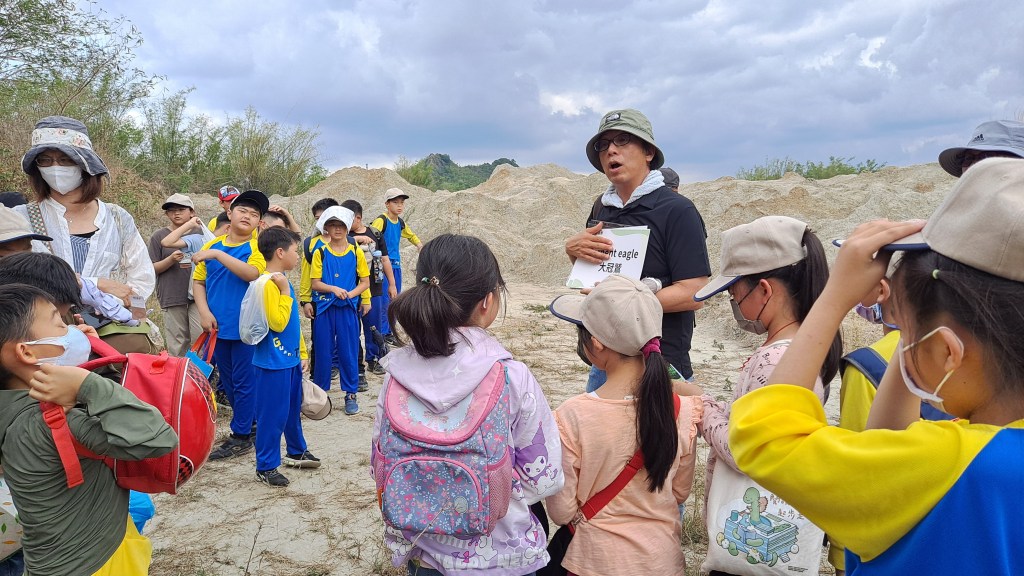
三次遊程皆由馬頭山自然人文協會會長黃惠敏擔任導覽者,帶領參與者走訪馬頭山生態廊道、麗湖、半天寮泥岩惡地與旗山生活文化園區。遊程以中文導覽結合英語詞彙學習方式進行,透過實地參與與互動交流,提升師生及家長對馬頭山的認識,同時也增進其英語表達能力。
All three tours were led by Ms. Hui-Min Huang, Chairperson of the Matoushan Nature and Culture Association. Participants explored key sites including the Matoushan Ecological Corridor, Lihu, the Bantianliao Mudstone Badlands, and the Qishan Cultural Living Park. The tours integrated Chinese-language guiding with English vocabulary instruction, enabling participants to learn about the region’s ecology while improving their English language skills through hands-on experience and interactive engagement.
馬頭山生態廊道為本次遊程的重要一站,黃會長帶領大家認識廊道各項設施與其功能,如「水撲滿」可於雨季儲水、乾季提供動物水源;同時介紹當地民俗植物,說明其在生活中的應用。計畫團隊老師則搭配導覽內容,介紹相關動植物的英文名稱與用法,加深參與者對導覽內容的理解。
The Matoushan Ecological Corridor was a key highlight of the tours. Ms. Huang introduced the corridor’s various ecological facilities and their functions—for example, the “water piggy bank” system, which stores water during the rainy season and supplies it to animals during dry periods. She also shared knowledge about local ethnobotanical plants and their traditional uses. Program instructors supplemented the tours with English vocabulary for local flora and fauna, enhancing participants’ understanding of both the environment and the language.
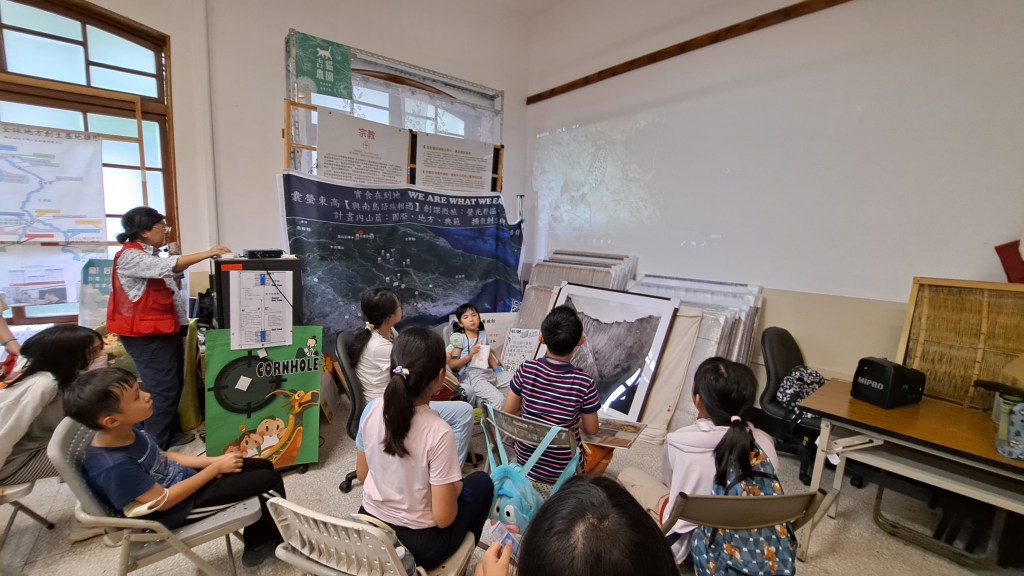
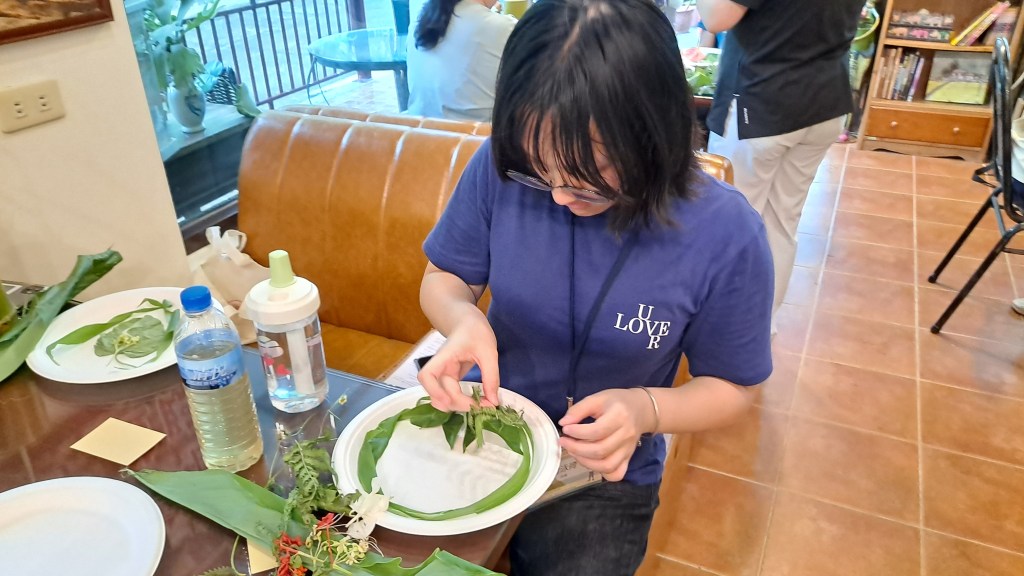
旗山生活文化園區的活動安排讓參與者透過觀賞穿山甲調查影像與資料,並由會長同步講解穿山甲的棲地習性與保育重點。隨後進行艾草棒DIY體驗,講師說明製作步驟與艾草的天然驅蚊功效,由參與者動手完成專屬的艾草棒,從中學習自然素材的應用價值。
At the Qishan Cultural Living Park, participants viewed video from local pangolin study, while Ms. Huang explained the species’ habitat preferences and the importance of its conservation. The session also included a hands-on mugwort stick DIY activity, where instructors guided participants through the crafting process, emphasizing the mosquito-repellent properties of natural mugwort materials.
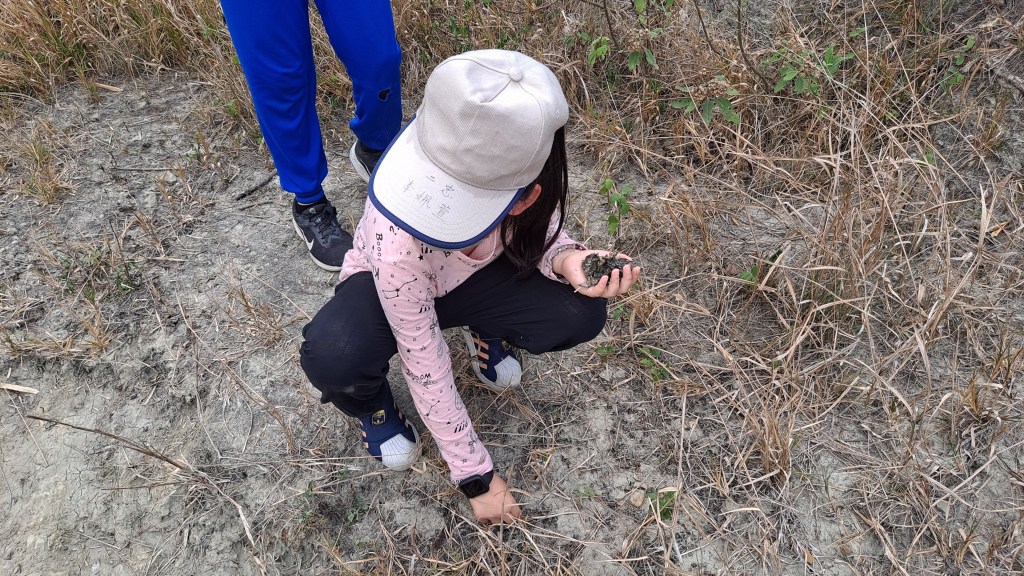
來到半天寮泥岩惡地,會長以簡明易懂的方式介紹此地獨特的地質景觀—泥岩惡地如何因雨水侵蝕而形成崎嶇特殊的地貌,並實地觀察當地特殊的「雨來菇」,說明其於降雨後自然生長的特性與在地料理方式。
In the Bantianliao Mudstone Badlands, Ms. Huang provided an accessible explanation of the area’s unique geological landscape—how mudstone badlands are shaped by rainfall and erosion over time. Participants also observed and learned about a unique local fungus known as “nostoc commune”, which sprout naturally after rainfall and are often used in local cuisine.
三場次的遊程活動豐富多元,不僅讓參與者深入認識馬頭山地區的生態,以雙語方式啟發學習興趣與語言應用能力,並透過活動帶領參與者思考環境保育的重要性。未來,計畫團隊將持續推動相關活動,深化民眾環境保育意識,並邀請更多夥伴共同行動,發掘並守護馬頭山的多樣之美。
These three rich and engaging tours not only deepened participants’ understanding of Matoushan’s ecological and cultural resources but also inspired bilingual learning and environmental awareness. Moving forward, the program team will continue promoting similar activities to strengthen public consciousness of ecological conservation, and invite more partners to join in protecting and celebrating the diverse beauty of Matoushan.
114年 馬頭山人文生態雙語營圓滿落幕
時間:7/16 (三) – 7/18(五)
馬頭山地區
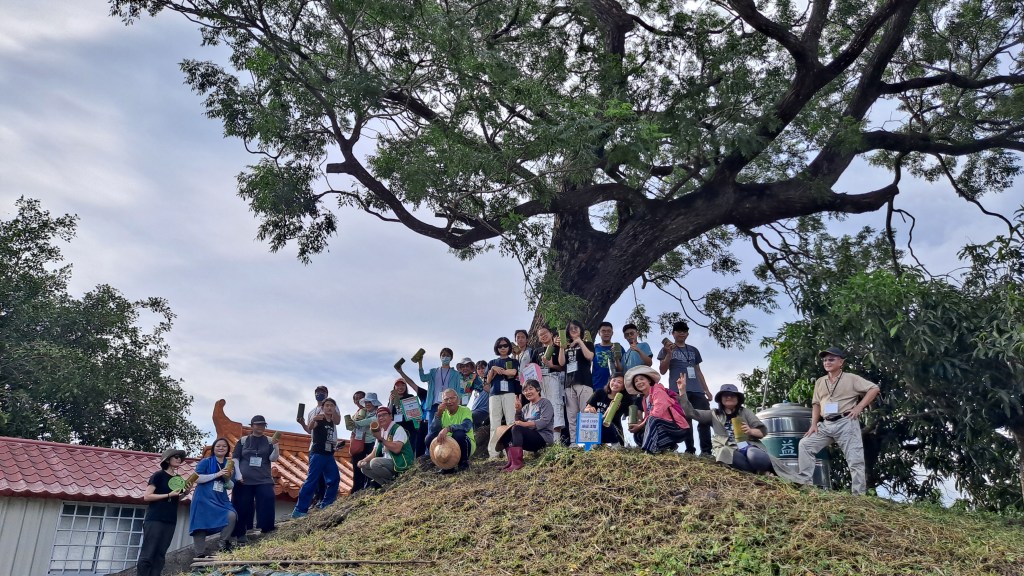
由文藻外語大學執行的114年淺山地區環境保育夥伴關係與社區培力計畫,於7月16日至7月18日舉辦為期三天的「馬頭山人文生態雙語營」。本次營隊邀請來自各高中職及大專校院的師生共同參與,透過在地居民的導覽與英語內容結合,讓夥伴們深入體驗自然生態與人文特色,並以雙語方式學習推廣馬頭山之美。
The 2025 “Shallow Mountain Area Environmental Conservation Partnership and Community Empowerment Program” held a three-day Matoushan Cultural and Ecological Bilingual Camp from July 16 to July 18. The camp invited teachers and students from various high schools, vocational schools, and universities to participate. Through guided tours by local residents integrated with English content, participants were able to deeply explore the natural and cultural richness of Matoushan while learning to promote its unique features in both Mandarin and English.
【第一天】從認識彼此到探索地質與野生動物
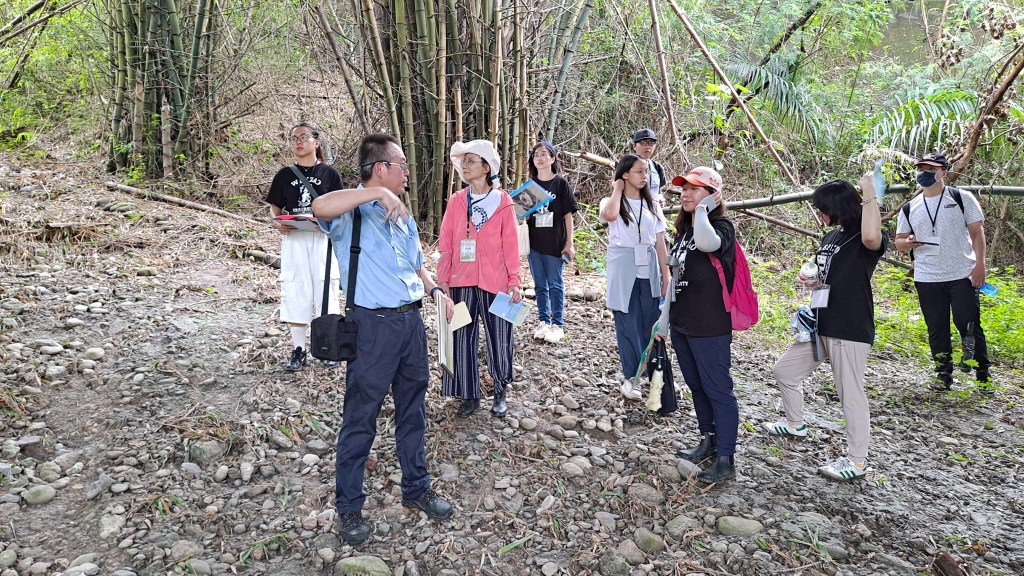
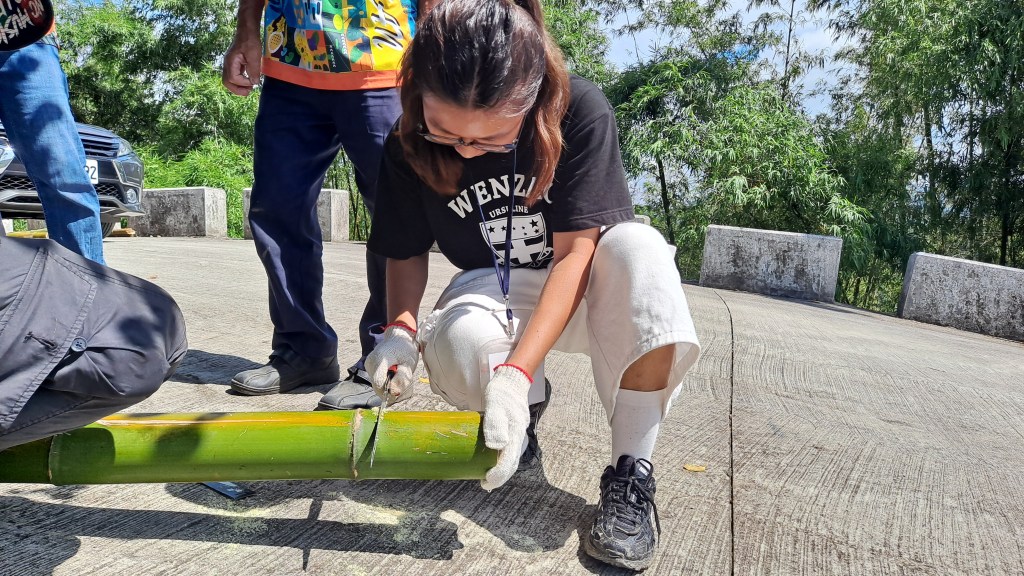
營隊首日由認識彼此活動開場,接著由馬頭山自然人文協會會長黃惠敏於基地簡介馬頭山的人文生態,並由在地夥伴劉達亮導覽馬頭山的生態廊道。下午進行在地特色植物「刺竹」的手作體驗,每位夥伴親自鋸竹、打磨,製作出屬於自己的竹製盆栽。
隨後由林定燊先生帶領學員踏訪古道與其家屋,親身見證因車瓜林斷層地震導致建築與道路龜裂的現象,深入理解地質活動對社區的影響。接著,大家前往半天寮,由內南社區發展協會理事長龔文雄校長介紹當地的地質特色。
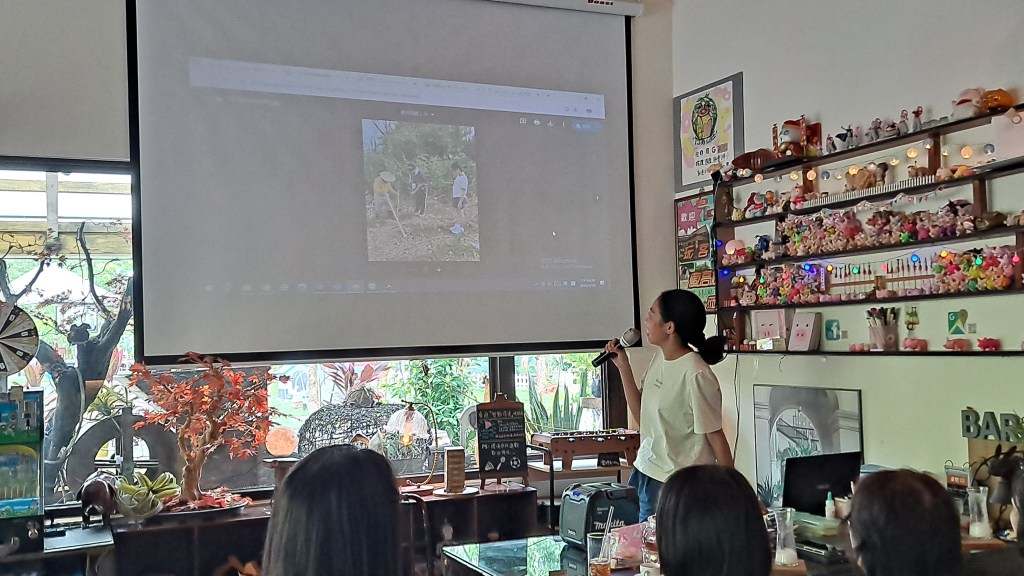
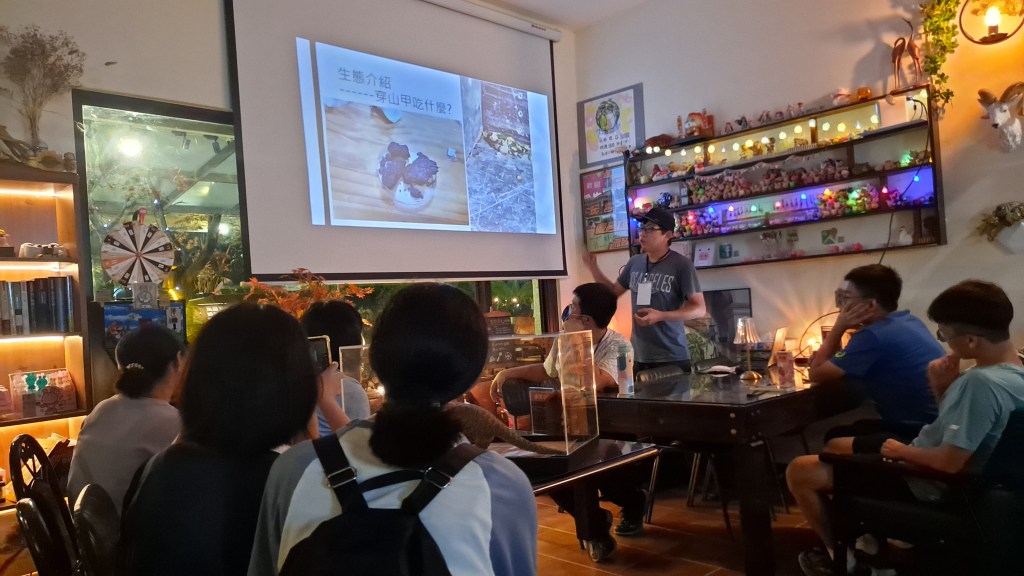
夜間活動則聚焦於野生動物「穿山甲」,由講師分享穿山甲的生態習性與保育觀念,並說明若在野外遇見穿山甲時應有的正確應對方式。
Day 1: From Icebreaking to Exploring Geology and Wildlife
The first day began with an icebreaking activity to help participants get to know each other. Following that, Hui-Min Huang, the President of the Matoushan Nature and Humanities Association, introduced the cultural and ecological landscape of Matoushan at the camp base. Local guide Da-Liang Liu then led a tour of the area’s ecological corridor.
In the afternoon, participants took part in a hands-on workshop using locally grown thorny bamboo. Each participant cut and sanded their own bamboo to create a unique handmade bamboo planter.
Later, Mr. Ding-Shen Lin first guided the group to his home, where they observed cracks caused by earthquakes along the Chegua-lin Fault, and then led them to explore the nearby historical trails. This allowed participants to witness the real-life impact of tectonic movement on local communities. The day concluded with a visit to Bantianliao, where Principal Wen-Hsiung Gong, Chair of the Neinan Community Development Association, explained the geological features of the area.
In the evening, the focus shifted to wildlife, with a lecture introducing the Formosan pangolin. The speaker discussed its natural behaviors, conservation efforts, and how to properly respond when encountering this rare species in the wild.
【第二天】走訪古厝、認識埤塘與民俗植物
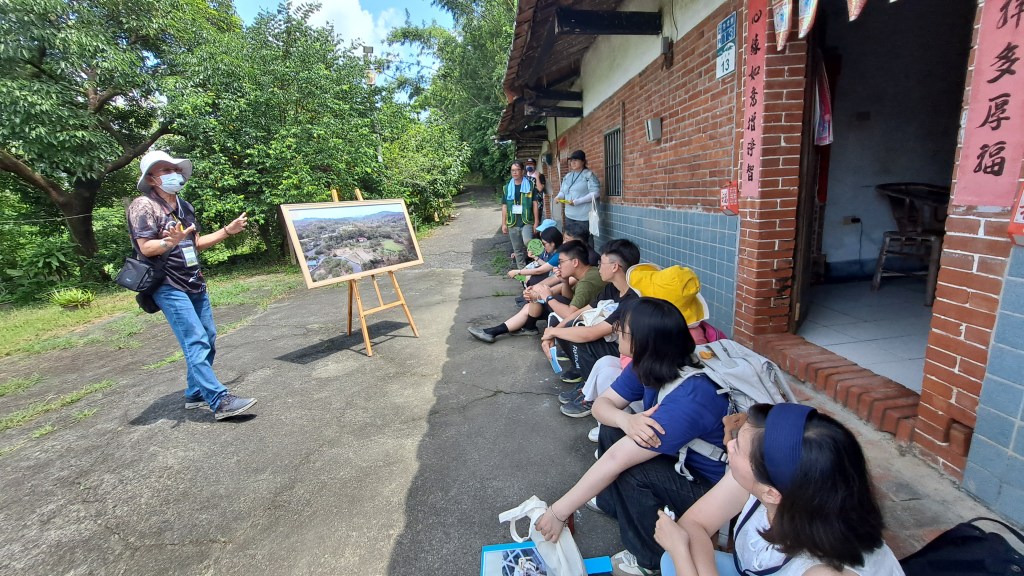
第二天早上,大家步行至龔校長的老宅,了解該建築融合在地建材與「一條龍」結構設計,展現傳統農村建築智慧。校長亦分享其家宅周邊數十年來的地景與人文變遷。接著參訪「鳥仔伯的家」了解當地的埤塘文化,隨後抵達德高埤,由龔校長導覽介紹當地超過六十種民俗植物及其生活應用。
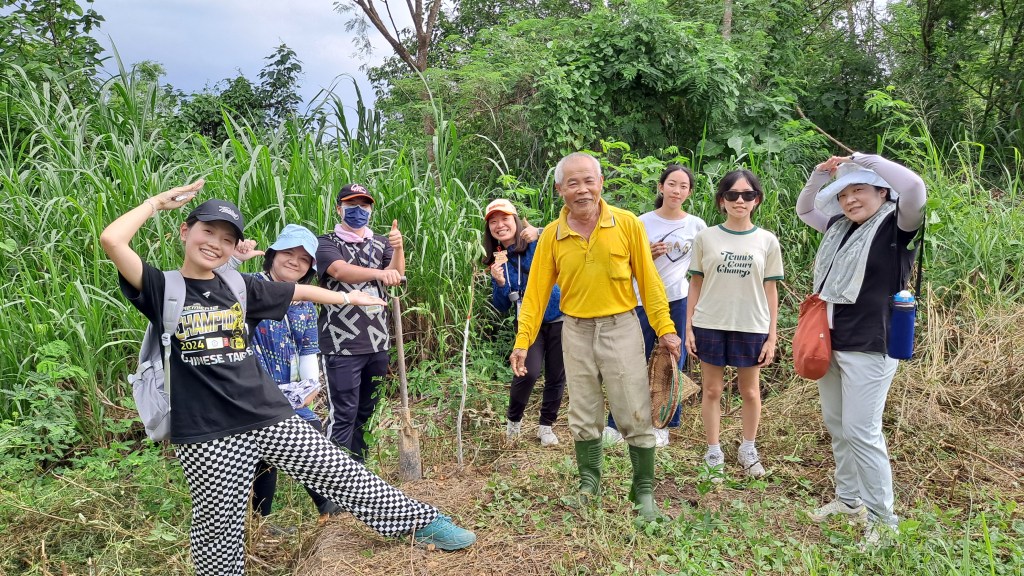
下午安排在地農家的植栽體驗與自然曼陀羅創作活動,夥伴們透過實作體驗自然之美與寧靜。夜間則由在地夥伴分享地生蘭與路殺調查紀錄,激發學員們關心在地生態的意識。
當晚各組依據二日所學提出推廣馬頭山特色的構想,並邀請在地夥伴一一至各組分享回饋與建議,促進雙向交流與創意激盪。
Day 2: Traditional Homes, Ponds, and Folk Plants
On the second day, participants walked to Principal Gong’s ancestral home to learn about its unique architectural design that incorporates local materials and a traditional one-building layout known as “Yi-Tiao-Long.” Principal Gong also shared insights on the transformation of the surrounding environment and community over the past few decades.
The group then visited the home of “Uncle Bird” to explore the area’s historical pond culture. Next, they traveled to Degao Pond, where Principal Gong introduced over sixty kinds of folk plants and their traditional uses in daily life.
In the afternoon, participants engaged in a planting activity at a local farm and created nature-inspired mandalas, allowing them to connect with the beauty and tranquility of the environment through creative expression.
That evening, local partners gave presentations on endemic orchids and roadkill survey data, sparking deeper ecological awareness among the participants. Each group then developed ideas for promoting Matoushan’s unique features and presented their concepts to local partners, who in turn offered feedback and suggestions, encouraging mutual learning and creative exchange.
【第三天】成果發表
第三天上午,全體夥伴合唱《馬頭山之歌》為活動揭開序幕。各組針對前一日晚間發想的方案進行討論修正,並於下午上台進行成果發表,展現三天以來的學習成果與創意構想。
Day 3: Final Presentations
The third day opened with all participants singing the “Song of Matoushan" together. Each group then refined the promotional ideas they had developed the previous evening and presented their final proposals in the afternoon, showcasing their learning outcomes and creative thinking from the camp.
本次馬頭山人文生態雙語營在在地夥伴的大力支持與協助下圓滿完成。活動不僅讓參與者更加認識馬頭山豐富的人文與自然資源,也激發對英語學習與在地推廣的熱情。未來計畫將持續透過多元活動深化環境保育意識,邀請更多人共同行動,看見並守護馬頭山的多樣之美。
Thanks to the strong support and collaboration of local partners, the Matoushan Cultural and Ecological Bilingual Camp concluded successfully. The event not only deepened participants’ understanding of Matoushan’s rich natural and cultural heritage but also ignited their enthusiasm for English learning and community engagement. Moving forward, the project will continue organizing diverse activities to raise environmental awareness and inspire more people to join in preserving the beauty and biodiversity of Matoushan.
l investigator to local community members, the event also featured an inspiring keynote address by Mr. Sun Chong-Jieh, Executive Director of SilTianShuiShe Sustainable Ecology.
114年淺山地區環境保育夥伴關係與社區培力計畫計畫說明會
主講人:計畫主持人 盧美妃、絲田水舌永續生態孫崇傑執行長
時間:4/13 (日) 14:00-16:30
內門紫竹寺旁圖書館會議室
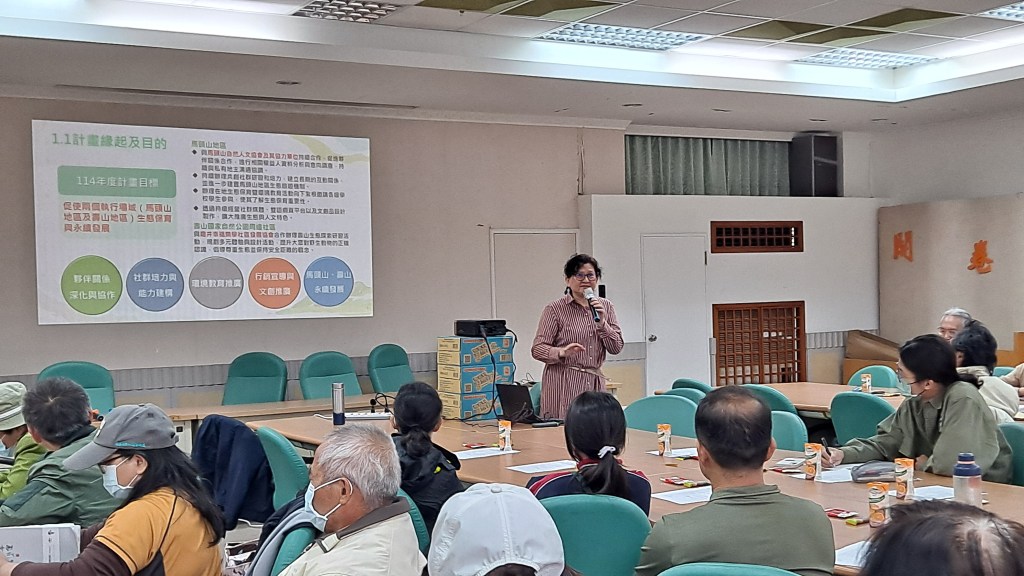
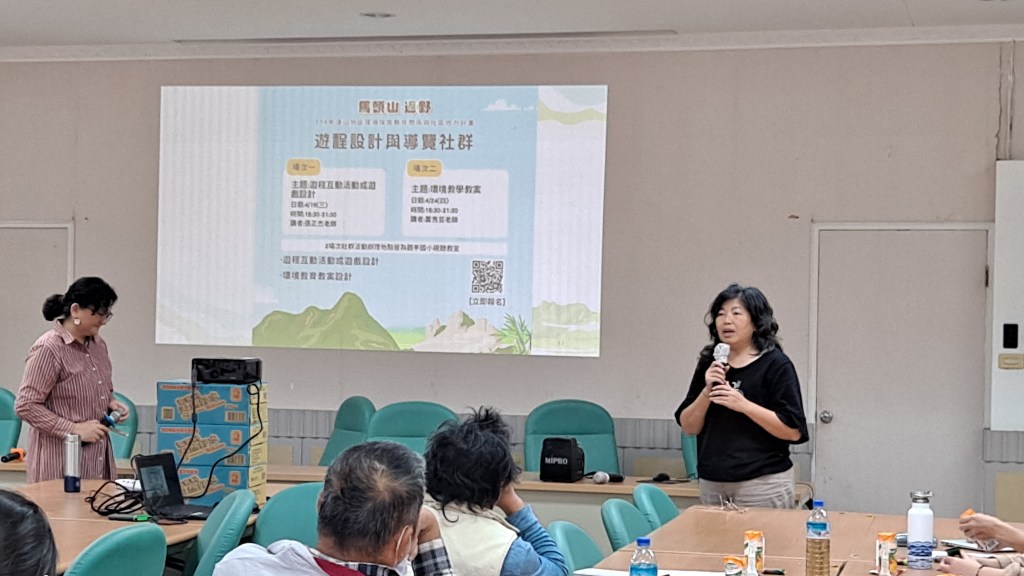
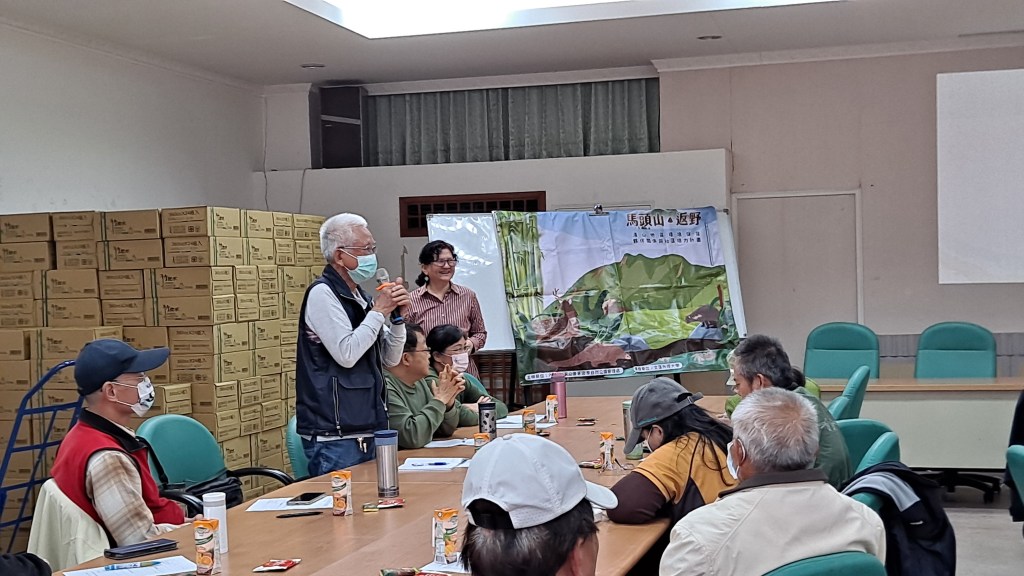
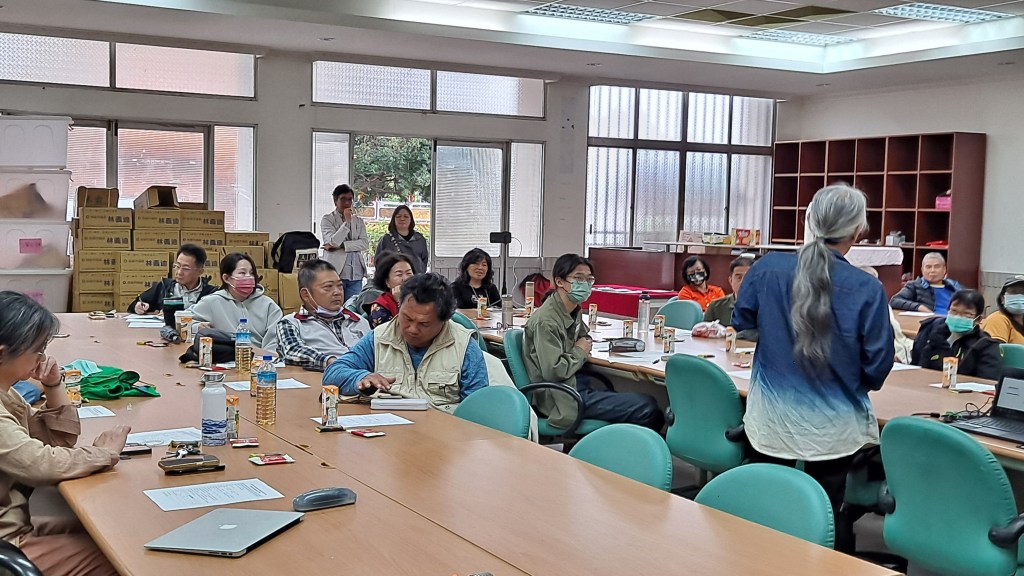
114年淺山地區環境保育夥伴關係與社區培力計畫於114年4月13日舉辦計畫說明會,活動除了由計畫主持人向在地社區居民說明本年度計畫內容外,亦邀請絲田水舌永續生態孫崇傑執行長蒞臨,進行一場深具啟發性的專題演講。
On April 13, 2025, The Shallow Mountain Area Environmental Conservation Partnership and Community Empowerment Program held a project briefing session. In addition to an overview presented by the project’s principal investigator to local community members, the event also featured an inspiring keynote address by Mr. Sun Chong-Jieh, Executive Director of SilTianShuiShe Sustainable Ecology.
會議一開始,由計畫主持人盧美妃老師介紹114年度計畫的整體規劃。延續前一年度的三大社群架構——「在地故事劇場社群」、「遊程設計與導覽社群」及「人文生態調查研究社群」,本年度將持續辦理相關研習活動,並將參與全國NGOs環境會議,協助推動倡議行動。
The session commenced with Professor Lu Meifei, the project’s principal investigator, introducing the overall framework for the 2025 program. This year’s initiative builds upon the previous year’s structure, continuing the three major community clusters: the Local Story Theater Cluster, the Ecotourism and Guiding Cluster, and the Humanities and Ecological Research Cluster. These groups will persist in offering workshops and will also participate in the National Environmental NGOs Conference to support environmental advocacy efforts.
此外,計畫也將新增在地耆老訪談作為重點項目,期望透過紀錄與整理,保存並推廣地方故事。同時,也規劃針對學生族群辦理遊程與營隊活動,藉此提升青年世代對生態保育議題的認識與關注。
Additionally, a new component of the program involves conducting interviews with local elders, with the aim of documenting and promoting community stories to preserve and disseminate local heritage. The program also plans to implement educational ecotourism itineraries and camp-based activities targeted at students, seeking to raise awareness of ecological conservation among younger generations.
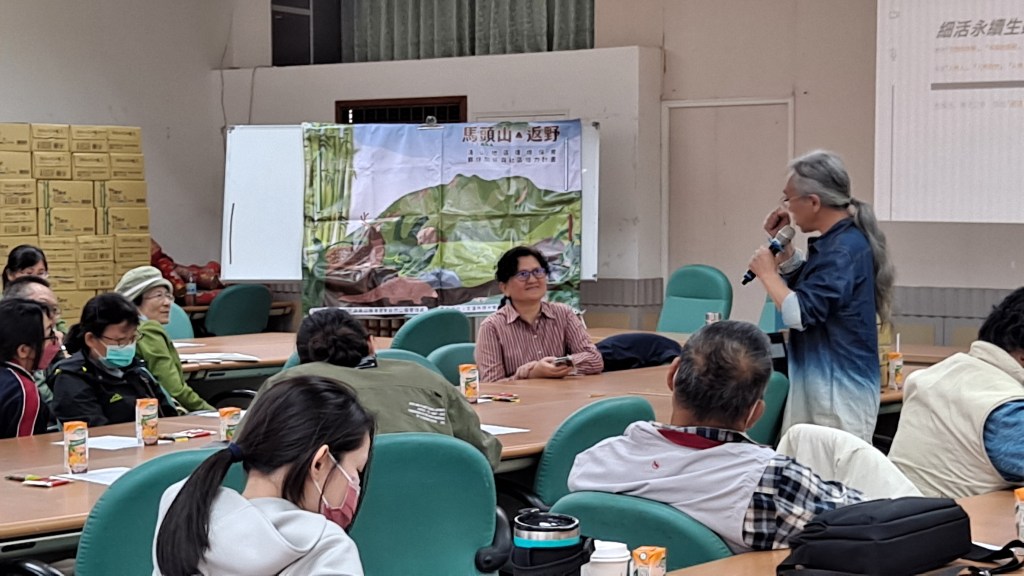
接續專題演講部分,由孫崇傑執行長分享其對環境保育的深刻見解。他指出,保存自然生態原貌是當前不可忽視的重要課題,並以「三農、三生、三態」為主軸,描繪出台灣鄉村永續發展的藍圖。
孫執行長亦解釋「絲、田、水、舌」四字所代表的深層意涵:
• 「絲」象徵創作與工藝的美感,讓人反思日常生活中的物品與其價值
• 「田」代表勞動與農耕,強調人與土地的重新連結
• 「水」傳達自然探索與生態感知的重要性
• 「舌」則呼應味覺、感官與生活美學,透過五感經驗建立與土地的情感連結
Following the project overview, Executive Director Sun delivered a keynote lecture, sharing his profound insights into environmental conservation. He emphasized the critical importance of preserving the natural state of ecosystems and introduced a conceptual framework based on the interrelation of “Three Agricultures, Three Livelihoods, and Three Ecologies,” outlining a sustainable development vision for Taiwan’s rural regions.
Mr. Sun also elaborated on the symbolic meaning behind the four characters in the name of his organization, Sil-Tian-Shui-She (絲田水舌):
• “Sil” (絲) represents creativity and the aesthetics of craftsmanship, prompting reflection on the materials and values embedded in daily life;
• “Tian” (田) symbolizes labor and agriculture, underscoring the need to rebuild connections between people and the land;
• “Shui” (水) conveys a sense of ecological exploration and sensitivity, encouraging attentiveness to the voices and values of nature;
• “She” (舌) invokes the sensory and culinary dimensions of life, fostering an aesthetic appreciation of place through the five senses.
演講中,孫執行長以桃米社區為例,分享該地在921地震後轉型為生態村的經驗。透過生態旅遊、環境教育及基礎建設的改善,如導覽設計、濕地建置與污水處理系統,不僅重建了生物棲地,也有效減少資源浪費,展現生產、生態與生活三者兼顧的可能性。
Drawing upon the case of Taomi Village, Mr. Sun illustrated how the community transformed into an ecological village following the 1999 Chi-Chi earthquake. Through ecological tourism, environmental education, and infrastructural initiatives—including themed guided tours, the construction of three ecological streams and three hectares of wetland, as well as over 100 household-scale ecological ponds and wastewater treatment systems—the community successfully restored local habitats and minimized resource waste, balancing production, ecology, and daily life.
他亦介紹「阿罩霧家鄉聚樂部」的飲食文化生態之旅,藉由社區居民的在地料理,讓人們品味土地風味,並以飲食作為串聯環境保育與教育的橋樑,彰顯人與自然間緊密的互動關係。
He also introduced the Azhaowu Hometown Club’s Ecological Culinary Tour, where local residents express the “taste of the land” through food. This initiative bridges environmental education and conservation, highlighting the deep interconnections between culture, cuisine, and ecology.
活動中,孫執行長亦說明社區永續性評分表的運用方式,從生態環境、社會經濟及文化精神等面向解釋其內涵,並以台灣現行16個生態社區的案例說明評分機制,鼓勵社區運用該工具進行自我檢視與改進。
Mr. Sun further explained the use of a Community Sustainability Assessment Matrix, detailing its dimensions across ecological, socio-economic, and cultural-spiritual aspects. Using data from 16 current ecological communities in Taiwan, he illustrated the scoring mechanism and encouraged communities to utilize this tool to identify and improve underdeveloped areas.
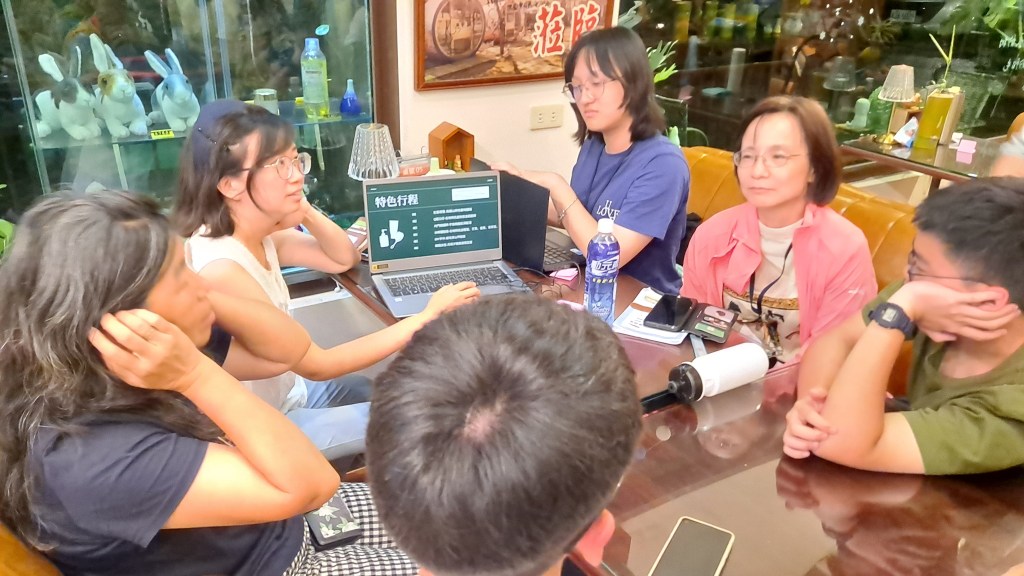
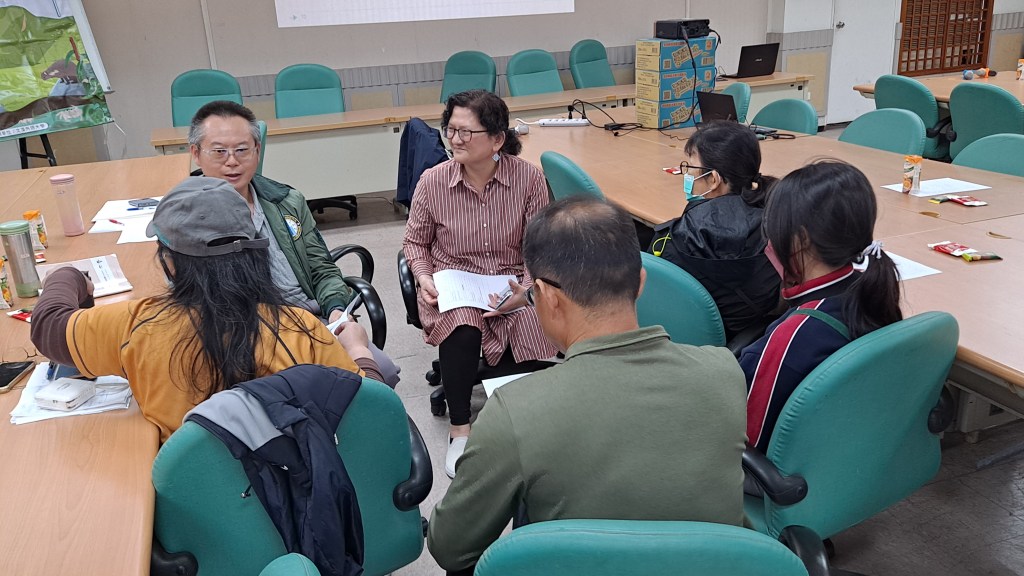
說明會最後,由計畫團隊成員引導與會者分組討論。透過自我介紹與主題交流,與會者分享對馬頭山的認識、對設立國家自然公園的態度,以及對該地未來發展的想像與建議,為計畫後續推動奠定寶貴的在地對話基礎。
The briefing concluded with a group discussion session facilitated by members of the project team. Participants were invited to introduce themselves and share their knowledge of Matoushan, their perspectives on its potential designation as a National Nature Park, and their visions for the region’s future. This dialogue laid a valuable foundation for continued local engagement and collaborative planning.
 馬頭山返野
馬頭山返野 